
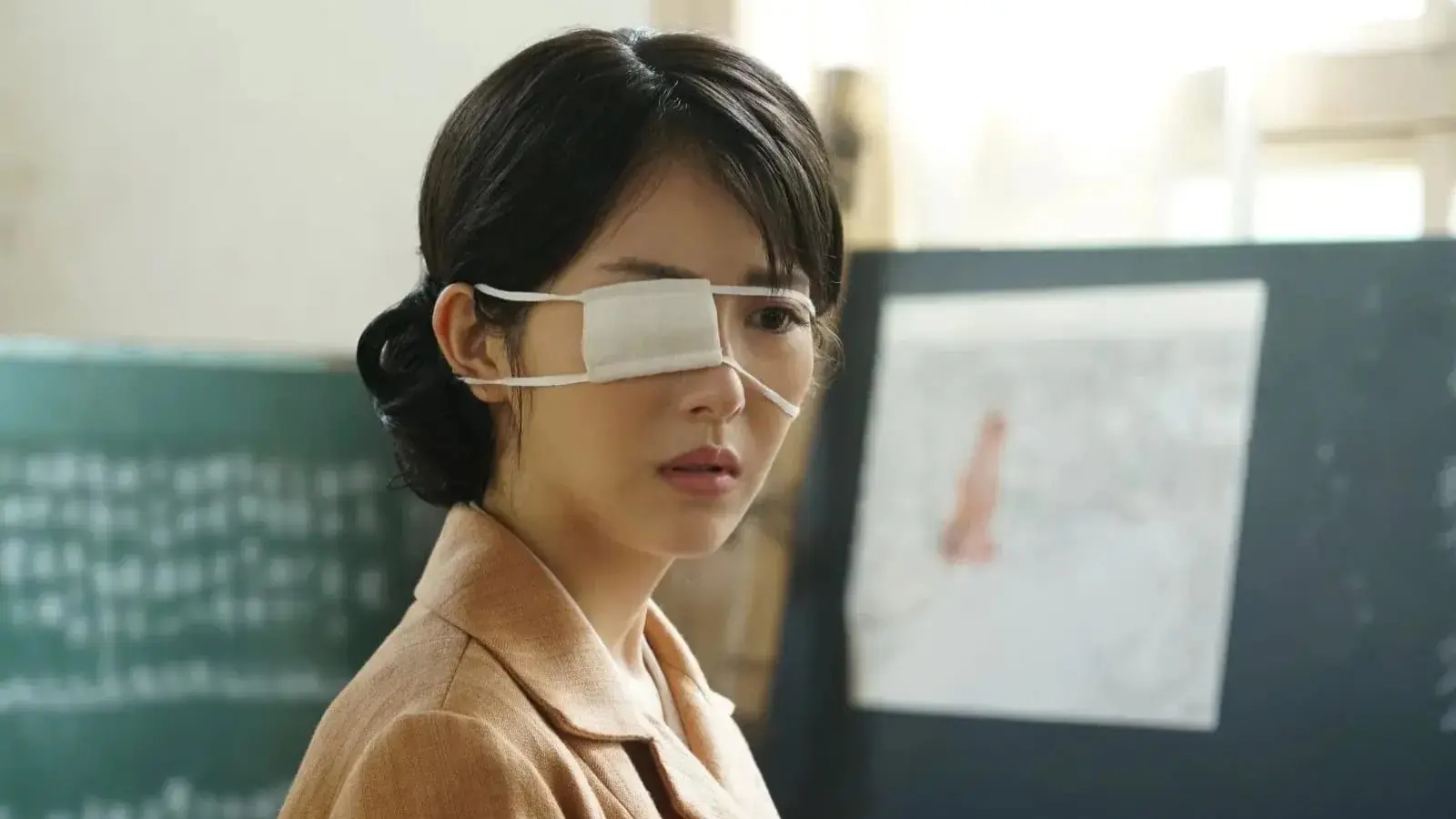
Minami Hamabe, the actress who plays Noriko in Godzilla Minus Zero, explained how her character’s relationship with Godzilla changed after the events of Godzilla Minus One. The sequel reveals that Noriko survived thanks to the so-called G-Cells—cells originating from the kaiju itself that entered her body and caused a mutation. However, that biological connection has not turned Godzilla into a positive figure for her.
Why does Noriko still hate Godzilla despite being connected to him?
In an interview with ComicBook, Minami Hamabe noted that, for Noriko, Godzilla continues to represent that which threatens to destroy everything the characters are trying to rebuild in post-war Japan: “For me, Noriko still sees Godzilla, in many ways, as a symbol of fear,” the actress explained.
“It represents fear itself and threatens everything that the characters in post-war Japan are trying to rebuild.”
The situation changes partially due to the G-Cells that are now part of Noriko, but Hamabe made it clear that this connection does not mean the character has begun to admire or accept the monster.
“I think that, in Minus Zero, a very intense hatred toward Godzilla and what he represents still exists; while the bond that now unites Noriko with Godzilla changes the situation slightly, I don’t think that means Noriko sees Godzilla in a positive light.”
The actress added that even the simple mention of the kaiju triggers a complex reaction in Noriko, who continues to associate him with the fear and destruction she previously experienced.
King Ghidorah shifts Godzilla’s place in the story
The arrival of King Ghidorah introduces an even greater threat and alters Godzilla’s role within the narrative. Faced with an enemy of that magnitude, the King of the Monsters may seem like the lesser of two evils, but even that does not completely change Noriko’s perspective.
Hamabe explained that the character understands how Ghidorah’s presence alters the big picture, though she still has no desire to encounter Godzilla ever again.
“Mainly because she understands that, with King Ghidorah’s presence, Godzilla’s position in the overall landscape has changed. But at the end of the day, I think Godzilla remains something Noriko does not wish to see under any circumstances.”
This dynamic allows the sequel to explore a distinct relationship between the two without turning it into a conventional alliance.
G-Cells could be key to Noriko’s future
The G-Cells not only explain how Noriko survived, but they also turn her into an even more critical piece within the narrative of Godzilla Minus Zero. The mutation establishes a direct link between her and Godzilla, expanding on one of the main mysteries left behind by the previous film.
ComicBook further notes that this connection could have consequences extending beyond this installment. The ending leaves open the possibility of further exploring both Noriko’s condition and her relationship with Godzilla, especially since the effects of the G-Cells do not seem to guarantee her permanent survival.
For now, Hamabe makes it clear that this transformation does not erase what happened: even though Noriko is literally connected to Godzilla, to her, the kaiju remains, above all else, a symbol of fear, destruction, and trauma.
