
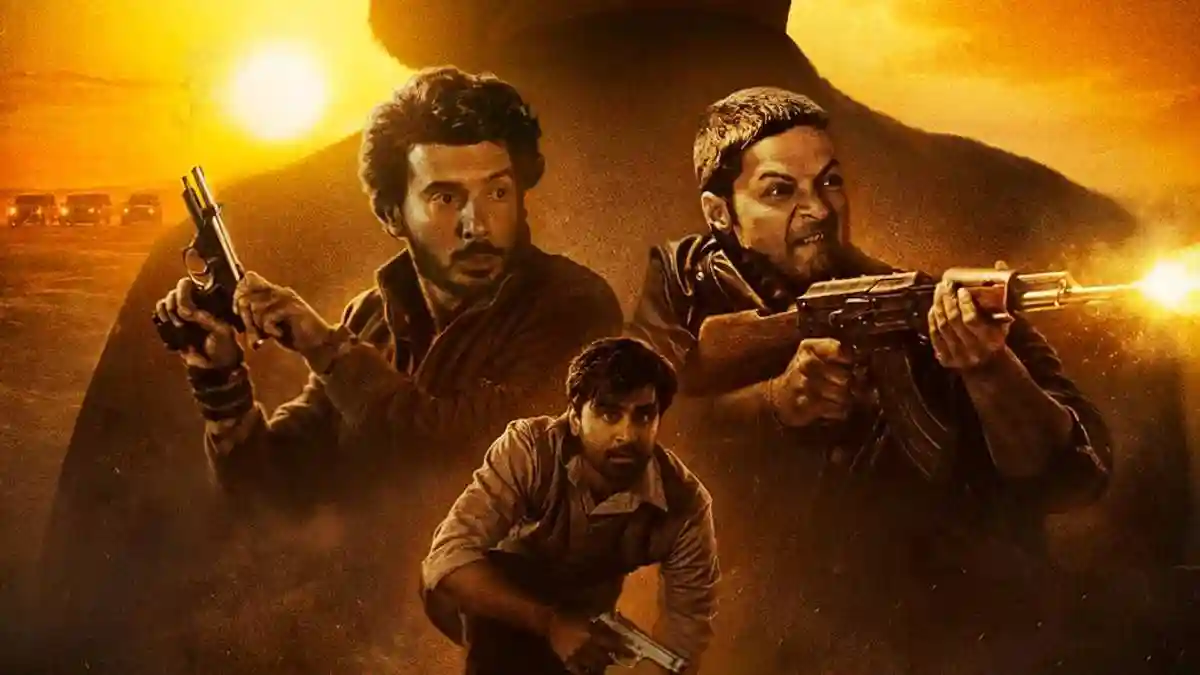
The blood, politics and never-ending power struggles of Purvanchal have finally moved from our screens to the big screen. Mirzapur: The Movie, directed by Gurmeet Singh and written by Puneet Krishna, comes into theatres with a pretty huge amount of hype behind it, which was always going to make things difficult. The Prime Video series has a very loyal fan base, and there are certain expectations that come with that. The movie does manage to deliver when it comes to action, scale and those big confrontations, but it also feels like the filmmakers were trying to fit a world built over several seasons into one movie. The result is entertaining in parts, but the pacing gets uneven and some of the story choices don’t really work as well as they should.
A New Fight for the Mirzapur Throne
The biggest change here is that the movie doesn’t lean as heavily on the family rivalries and personal grudges that drove much of the original series. Instead, there’s a new threat in town. Ravi Kishan plays Babban, a ruthless and ambitious figure from the crime world who wants the Mirzapur throne for himself, and his arrival gives the story a much bigger, almost invasion-like feel. Pankaj Tripathi is back as Kaleen Bhaiya, and thankfully, he hasn’t lost that quiet menace that made the character so memorable in the first place. He doesn’t need to shout or do much to make a scene uncomfortable. The tension between Kaleen Bhaiya and Babban becomes the main attraction whenever they’re together, and some of the film’s better moments come from simply watching these two try to figure each other out.
Taking Mirzapur From Streaming to the Big Screen
Moving Mirzapur from a long-form series into a two-hour-plus theatrical story was never going to be an easy job. The movie does make good use of the larger format. The action looks bigger, the cinematography has more room to breathe, and the background score adds plenty of weight to the violent world the franchise is known for. There is a clear attempt to make this feel like an event rather than another extended episode of the series. Bringing in an outside threat also makes sense from that point of view, because the film needs a conflict that can get moving fairly quickly instead of spending hours setting up another complicated family feud.
The problem is that this shortcut also takes away some of what made Mirzapur work so well. The series had time to let characters become messy, unpredictable people, and its rivalries weren’t always about who was going to win the next fight. There was history behind almost everything. Here, a lot of that has to be pushed aside so the movie can get on with its central conflict. Some familiar relationships and character dynamics don’t get enough space, while the new antagonist gets a surprisingly large share of the attention. It’s understandable from a movie-making point of view, but for people who came to see the Mirzapur characters they already know, it can feel like something is missing.
The Second Half Loses Some Steam
The first half is probably where the movie feels most confident. There’s plenty happening, the action keeps things moving and the confrontations have the kind of tension you’d expect from Mirzapur. Once the second half begins, though, things become much more stretched out. The story around Babban starts taking longer than it really needs to, and a few scenes feel like they could have been cut without anyone really missing them.
By the time the movie reaches its climax, the direction starts feeling a little scattered. There are several things competing for attention, and instead of building toward one really sharp payoff, the film takes the longer route. This is especially noticeable because the original series was usually quite good at making its character conflicts feel personal. Here, the larger scale sometimes comes at the expense of that personal edge.
The Performances Work, Even When the Characters Don’t
The cast is still one of the movie’s strongest points. Ali Fazal is particularly good as Guddu Pandit. There’s a physical intensity to his performance that suits the theatrical format, and he brings a rawness to Guddu that makes even the quieter moments interesting. Jitendra Kumar also fits comfortably into his role and adds something to the proceedings whenever he gets the chance.
But then there’s Munna Bhaiya, and this is probably going to be one of the more debated parts of the movie among fans. Divyendu’s Munna was such a huge part of what made the original Mirzapur click, so seeing him pushed into the background, especially during the first hour, is bound to be frustrating for some viewers. The movie spends so much time building up Ravi Kishan’s Babban that Guddu and Munna, two characters fans already have a strong connection with, sometimes feel strangely secondary. That’s a risky choice when you’re making a theatrical continuation of a franchise whose characters are arguably its biggest selling point.
Final Verdict
Mirzapur: The Movie has enough blood, action, tension and familiar faces to give fans the big-screen version of the franchise they came looking for. When it focuses on Kaleen Bhaiya, Guddu and the new threat posed by Babban, the movie can be genuinely engaging, and the larger production certainly gives some of the action sequences more punch. But it doesn’t always know how to balance that bigger scale with the character-driven storytelling that made the series so popular.
For die-hard Mirzapur fans, there’s still plenty here to enjoy, especially if what you want is a loud, violent theatrical ride. But the movie doesn’t quite capture the same balance of dark humour, character drama and unpredictable relationships that made the original show stand out. It’s bigger, certainly. It just isn’t always better.