

Convoluted multiverses, bloated visual effects and a glut of existential angst often cloud modern action television, leading one to question if anyone involved knows the purpose of the show is to entertain. Reacher, available on Prime Video, offers a welcome departure from the aforementioned. It goes back to the basics of episodic storytelling, and it still works really well. Perhaps because it’s so simple. From the conspiracy-riddled chaos of Philadelphia in Season 4, to the small-town corruption, the series has crafted a modern action television experience that is as fresh as it is a reminder of Lee Child’s bestselling novels. The story-telling style has something of an old-fashioned feel to it but the pacing keeps it from being stuck in the past. The program is confident, moves with agility, and does not spend an undue amount of time regretting its actions.
The power of the physicality of the book

Much of Reacher’s success can be traced to the resolution of one of the most glaring casting problems in the character’s screen history. Tom Cruise’s version of Reacher could have delivered action thrillers but there was always one huge detail missing: he didn’t look like the character from the Lee Child books. Reacher’s size is not just character trivia, or something put in to help the reader picture him. It affects how he is seen. His physical presence is a weapon before he throws a punch and when he walks into a room everyone else has to expect the biggest man in the room just walked in. That might seem like a small difference on paper, but it makes a huge difference to the character.
That’s almost immediately solved by the casting of Alan Ritchson. Ritchson, at 6’3” and possessing just the right amount of muscle to make most doorways seem a little small, gives Reacher the physical presence the books have always called for. It changes the staging of action scenes, interrogations, even regular conversations, as the audience is never reminded that this is a man that others should perhaps think twice before provoking. Reacher doesn’t need high-tech gadgets, complicated martial arts moves, or frantic camera work to make someone feel anxious. He can stay where he is and let the other guy figure it out. However, Ritchson’s portrayal of Reacher works because he doesn’t constantly play him as an angry brute just waiting for an excuse to break someone’s nose. He has a dry sense of humor, a surprising amount of warmth and a quietness. He’ll occasionally throw out a line with such dead seriousness that it is funny without him appearing to be aware of it. This is important as it makes Reacher a menacing figure without making him someone you wouldn’t want to talk to.
Sherlock Holmes in a Size 3XL T-Shirt

The reason the show doesn’t turn into a story about a very large man punching progressively more unfortunate individuals is that Reacher is also exceedingly intelligent. As a former Major with the Special Investigators unit of the U.S. Army, he’s usually the most observant guy in the room. Much of the focus is on his physical strength, because it is impossible to avoid, but violence is seldom his first choice. Often he has already worked out what the situation is before the rest of the group has even got their heads round the first event. The detective side of the character has a big impact in the series personality. He looks at crime scenes and notices the smallest details; he sets timelines and reads body language, which others tend to miss. His approach to a mystery is the patience of a man who knows that the smallest detail is usually the most important.
The series is built on combining these two aspects of Reacher which adds a lot of value. He gets an intellectual thrill from spotting a liar, working out a conspiracy or seeing something other people have missed and then the very much simpler thrill of seeing him physically interact with the people responsible. He can guess how long an event will last, calculate the trajectory of a bullet, and read the movements of a person. Then he uses his fists to solve any other problems that may arise. When you put it like that it is a little bit of an absurd combination but that is also the reason it works so well. Reacher provides the audience with two kinds of satisfaction, without having to choose between them: watching him outwit the bad guys, and then, when it all gets less diplomatic, watching him dismantle them. The character is essentially Sherlock Holmes, only if Sherlock Holmes were built like a pro linebacker and had a far lower tolerance for paperwork.
Practical, visceral fight choreography
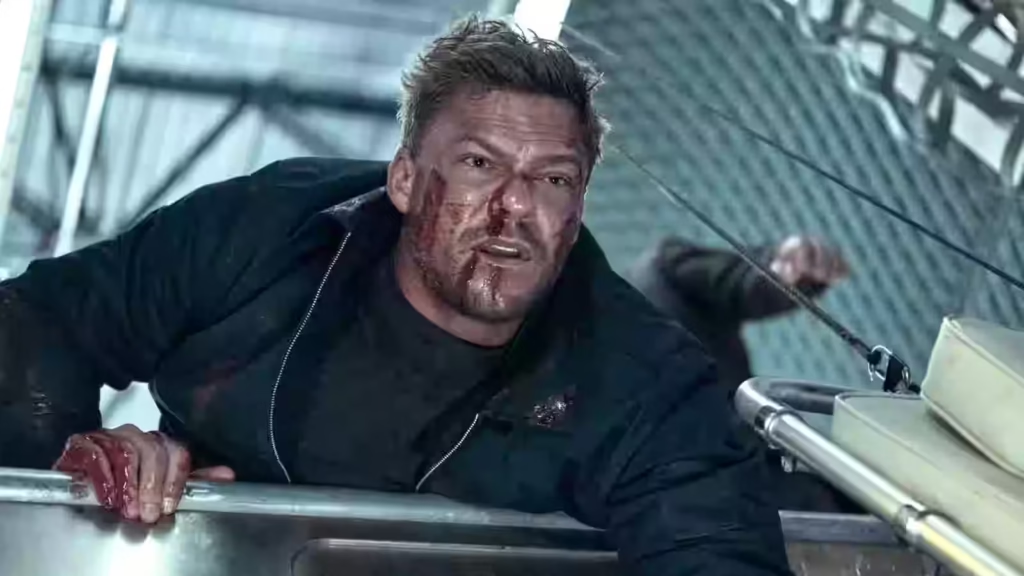
While action television can sometimes be weighed down by green screens, wire work, digital doubles and camera movements that seem designed to ensure the viewer never quite knows what’s happening, Reacher tends to take a more grounded approach to its fight scenes. The choreography, deliberately simple, physical and close, is a perfect complement to the character. Reacher’s fighting style is not one where he tries to impress an audience. He has a military background. He fights because he is faced with a problem and he wants to solve it as quickly as possible. There is little wasted motion. He uses leverage, his environment and raw physical force, not complex combinations just for the visual effect. The result may not be the most visually pleasing action choreography on TV, but it often is more believable because of the weight of the fights.
The program also recognizes that the setting can add to the interest of an encounter. The series often places Reacher in cramped alleys, bathrooms, kitchens, train cars, and other places where there’s barely room for everyone to stand comfortably, let alone fight, rather than giving him endless open spaces in which to throw people around. This makes the violence more urgent because you can see where everyone is and you know why one person has an advantage. The camera is mostly steady and at a distance that allows the audience to follow the action – a luxury increasingly rare in contemporary action television. You don’t need to cover up bad choreography with a dozen cuts in three seconds. You can feel the impact of Reacher’s punches, and you can see him use his environment. His approach to fighting is much the same as his approach to problem solving: find the threat, deal with it efficiently, and don’t waste time making the solution more complicated than it has to be.
Season 4 is getting more intense
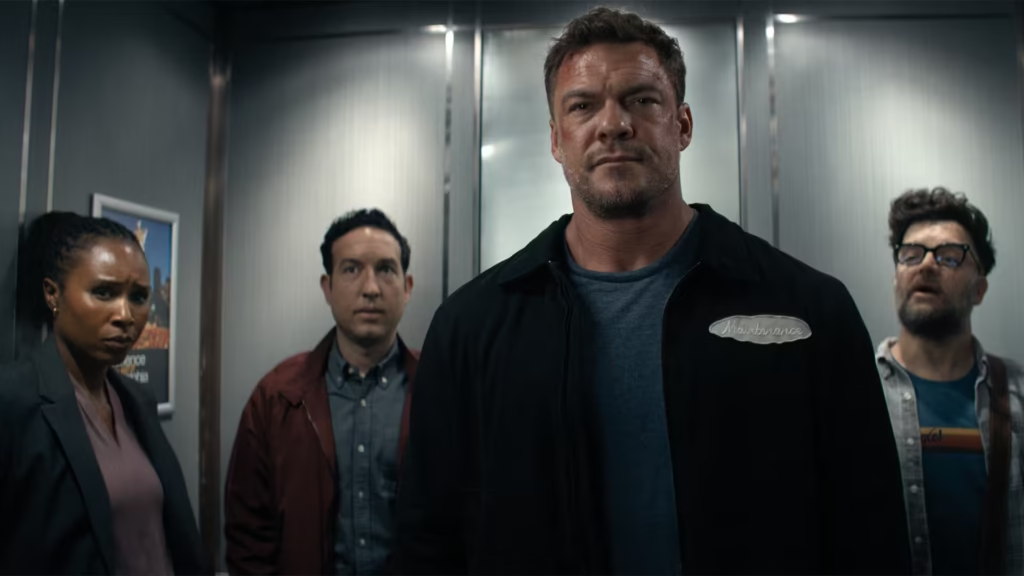
Season 4 takes on one of Lee Child’s more ambitious stories, Gone Tomorrow, and shows Reacher still has plenty of room to grow. This time the character is transplanted to Philadelphia, a major departure from the small-town mysteries that have defined the series so far. The season opens with a chilling subway encounter where Reacher sees a stranger seemingly kill himself, and the story then branches out to involve international espionage, political corruption and mercenary operations. This is a big jump in scale, but the program does not suddenly throw out the elements that helped make its previous seasons successful. In the larger picture, Reacher is confronted with a different kind of task. It’s no longer just one corrupt sheriff, or one criminal gang, or one small town where everybody seems to know everybody else.
Instead he has to deal with police departments, federal agencies, foreign operatives, and criminal syndicates, often trying to figure out which side of the situation any given individual is on. This leads to a greater number of moving parts and thus a greater chance of mistakes. The key thing is that there’s no need to change Reacher himself, so as to fit the larger story. His investigative instincts are just as strong in the crowded streets of a city as out in the remotest wilderness and his basic methodology is the same. He watches, he calculates, he follows the evidence until there is no other choice, and then he turns very physical. The conspiracy might be bigger, but the character is still the same Reacher viewers wanted in the first place. In that regard, Season 4 expands the world he lives in without diluting the formula, which is probably the smarter move.
Narrative Catharsis Without Apologies

The prestige TV of today is very invested in morally ambiguous characters who spend a lot of time thinking about what they’ve done. The story is often about reminding the reader that justice is messy and complicated and rarely satisfying, even when they win. After enough shows built around damaged antiheroes and deliberately ambiguous endings, Reacher’s simple approach almost becomes rebellious. But there’s nothing inherently wrong with that approach. In effect, Jack Reacher is a knight-errant of the modern age, a traveling investigator with only a toothbrush, no home, no political agenda, no interest in institutional bureaucracy when he already knows what’s what. He sees a problem, identifies the person who is responsible and gets involved because he can do that.
Reacher is the guy who comes along when the systems that are supposed to protect the average person have failed. Human trafficking, corruption, murder, whatever it may be. The appeal is simple, and that’s the point. Reacher figures out what happened and the offenders pay the price. It’s reassuringly straightforward, especially considering that so much of today’s television is about turning every win into a loss. Reacher doesn’t spend half an episode explaining the specifics of justice after the bad guys are put away. The story is happy to let the satisfaction of the moment take over once the mystery is solved and the guilty are dealt with. Then Reacher takes his toothbrush and goes on his journey, gets on the bus leaving town, and leaves before anyone can convince him to stay put. The real secret of Reacher is it’s simplicity. It is clear about the kind of program it wants to make and, more importantly, it does not seem to be ashamed of it. Sure, there are more elaborate, crazy, sprawling action series out there than this, but sometimes you just want a big, smart guy in a 3XL t-shirt to walk into a bad situation, figure out what’s really going on and make life a lot worse for the people who deserve it.